


Published December 9, 2021. Updated June 4, 2026. Open access. | Purchase book ❯ |
Variable Worm-Lizard (Amphisbaena varia)
Reptiles of Ecuador | Amphisbaenia | Amphisbaena varia
English common name: Variable Worm-Lizard.
Spanish common names: Pudridora del Chocó, pudridora, culebra ciega de la costa (Ecuador); lagarto gusano moteado, lagartija gusano, tatacoa (Colombia); lagarto de dos cabezas (Panamá).
Recognition: ♂♂ 42.4 cmMaximum distance from the snout to the tip of the tail. Snout–vent length=40.4 cm. ♀♀ 46.3 cmMaximum distance from the snout to the tip of the tail. Snout–vent length=40.5 cm..1,2 The Variable Worm-Lizard (Amphisbaena varia) is a highly specialized fossorial reptile belonging to the suborder Amphisbaenia—a distinct lineage evolutionary separate from both true lizards and snakes.3 It is readily distinguished from all other legless reptiles in its range by a diagnostic combination of two features: a striking cream-white or light pink ground color overlaid with dense, dark brown to black rectangular markings that form a checkerboard pattern, and a body completely encircled by regular, segment-like annuli (rings of scales; Fig. 1).4,5 The eyes are extremely reduced and vestigial but remain structurally functional, giving rise to its local vernacular name “culebra ciega” (=blind snake). Within the Pacific lowlands of Ecuador, no other squamate bears even a remote resemblance to A. varia.
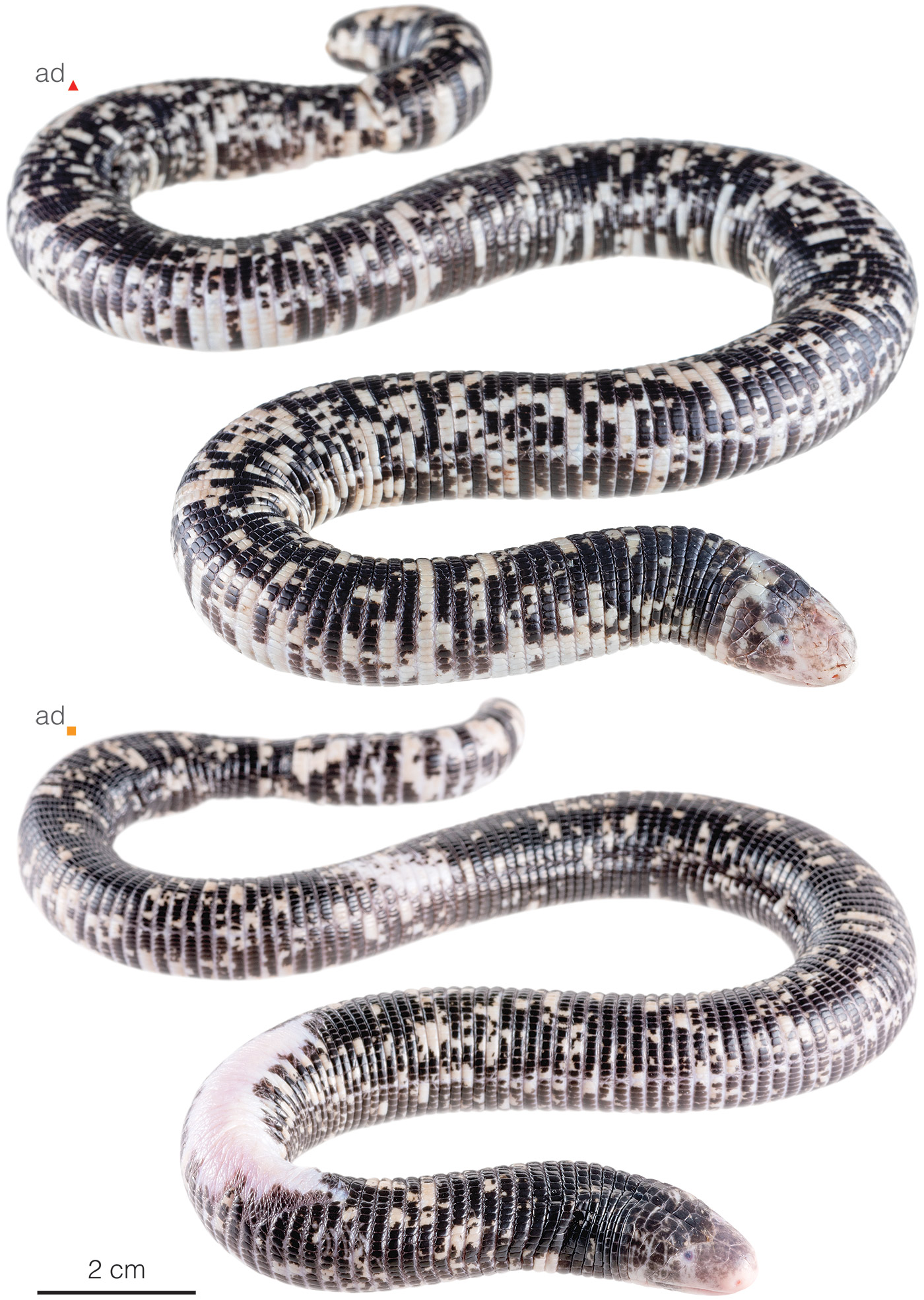
Figure 1: Individuals of Amphisbaena varia from Durango () and Gualpí (), Esmeraldas province, Ecuador.
Natural history: Amphisbaena varia is a cryptic, fossorial, and predominantly nocturnal reptile that spends the majority of its life within self-excavated subterranean tunnel networks.1,6 Variable Worm-Lizards emerge at the surface rarely, primarily during crepuscular or nocturnal windows; however, diurnal surface activity over soil or leaf-litter is sometimes observed, particularly when heavy rainfall inundates their underground burrows.1,7 Microhabitat records include an individual recovered from a self-made tunnel directly beneath a decaying tree stump.1 Amphisbaena varia occupies pristine to moderately disturbed lowland rainforests, as well as forest clearings, agricultural plantations, rural gardens (including compost heaps), and peri-urban or urban environments where they occasionally enter houses.1,7,8 This species utilizes a specialized rectilinear form of locomotion, relying on vertical skin folds to move in a straight line reminiscent of an earthworm.9 Its primary anti-predator response is to rapidly burrow out of sight; if handled, individuals contract their bodies, attempt to bite,1 or employ caudal autotomy to shed the tail.7 The only documented predator is the Anchor Coralsnake (Micrurus ancoralis).10 While A. varia is oviparous, its specific nesting sites remain unrecorded; however, congeners are well known to deposit eggs inside the highly regulated thermoregulatory microclimates of active ant or termite nests.11
By purchasing the hardcover or PDF of the Reptiles of Ecuador, you help keep this website 100% free.
Conservation: Least Concern Believed to be safe from extinction given current circumstances..12,13 Amphisbaena varia is listed in this category due to its extensive geographic distribution, particularly across large tracts of continuous, structurally intact habitats like the Chocó rainforests of the Colombian Pacific coast, making significant range-wide population crashes unlikely.12,13 Nevertheless, the species is vulnerable to localized declines. A primary threat is the conversion of native forests to intensive agriculture, coupled with the heavy application of chemical pesticides that decimate populations of soil-dwelling invertebrates. Additionally, vehicular traffic represents an increasingly significant source of anthropogenic mortality during surface movements.1,7 Given their specialized terrestrial locomotion and slow surface pacing, these fossorial reptiles are inherently incapable of avoiding oncoming traffic and are frequently victims of roadkill.1,7
Distribution: Amphisbaena varia occurs in the Mesoamerican lowlands of eastern Central America, the Chocó region of northwestern South America, and the valleys of the rivers Magadalena and Cauca in Colombia. The species occurs from central Panamá to southwestern Ecuador, where it has been recorded at elevations between 6 and 1090 m (Fig. 2).
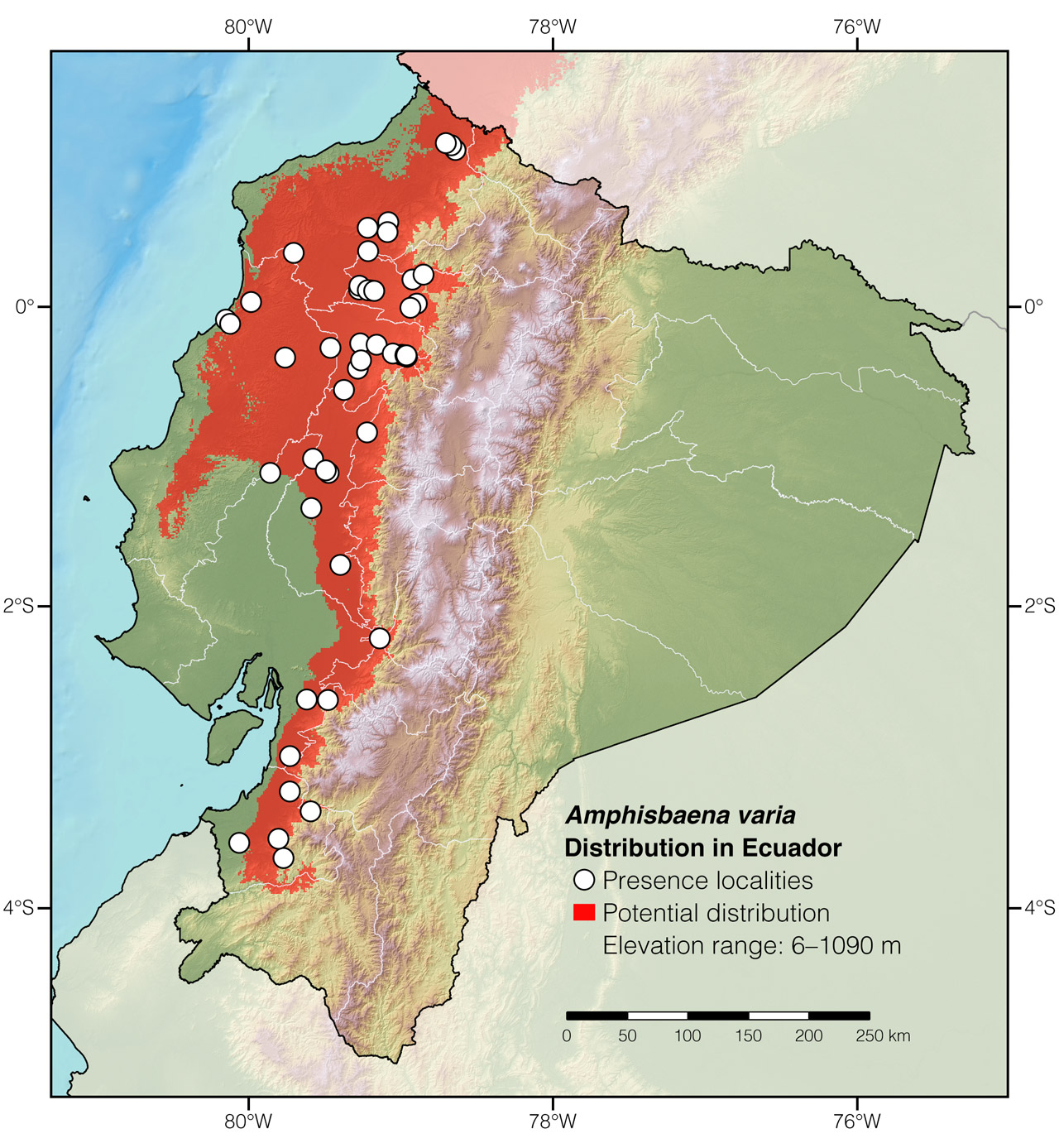
Figure 2: Distribution of Amphisbaena varia in Ecuador. See Appendix 1 for a complete list of the presence localities included in the map.
Etymology: The name Amphisbaena is a Latin word used to refer to a “fabulous serpent having a head at each end.”14 In this species, the head and the tail are very similar, which can give the illusion that the animal is advancing backwards. The specific epithet varia comes from the Latin word varius (=diverse).14 It probably refers to the variegated dorsal pattern.
Where to observe: Variable Worm-Lizards can be found at a rate of about once every few months in the northern part of its range in Ecuador, particularly around the secondary woodlands surrounding the town of Puerto Quito in the Pichincha province.
Acknowledgments: Special thanks to Lina Parra for helping compile some of the information used in this account. Thanks to Matteo Espinosa, Eric Osterman, and Frank Pichardo for their help finding this species in the field.
Special thanks to Tim Paine for symbolically adopting the Variable Worm-Lizard and helping bring the Reptiles of Ecuador book project to life.
Author: Jose VieiraaAffiliation: Tropical Herping (TH), Quito, Ecuador.,bAffiliation: ExSitu, Quito, Ecuador.
Editor: Alejandro ArteagacAffiliation: Fundación Khamai, Reserva Arlequín, Ecoruta Paseo del Quinde km 56, Santa Rosa de Mindo, Pichincha 171202, Ecuador.
Photographers: Jose VieiraaAffiliation: Tropical Herping (TH), Quito, Ecuador.,bAffiliation: ExSitu, Quito, Ecuador. and Sebastián Di DoménicodAffiliation: Keeping Nature, Bogotá, Colombia.
How to cite? Vieira J (2026) Variable Worm-Lizard (Amphisbaena varia). In: Arteaga A, Bustamante L, Vieira J (Eds) Reptiles of Ecuador: Life in the middle of the world. Available from: www.reptilesofecuador.com. https://doi.org/10.47051/YXFM2018
Literature cited:
- Ray JM (2015) Amphisbaena varia (Linnaeus, 1758) (Amphisbaenia: Amphisbaenidae): new distributional records from western Panamá. Herpetology Notes 8: 191–196.
- Vanzolini PE (1951) Contributions to the knowledge of the Brasilian lizards of the family Amphisbaenidae Gray, 1825. 6. On the geographical distribution and differentiation of Amphisbaena fuliginosa Linné. Bulletin of the Museum of Comparative Zoology 106: 1–67.
- Gans C (2005) Checklist and bibliography of the Amphisbaenia of the world. Bulletin of the American Museum of Natural History 289: 1–30.
- Vanzolini PE (2002) A second note on the geographical differentiation of Amphisbaena fuliginosa L., 1758 (Squamata, Amphisbaenidae), with a consideration of the forest refuge model of speciation. Anais da Academia Brasileira de Ciências 74: 609–648.
- Yánez-Muñoz M, Meza-Ramos P, Ramírez S, Reyes-Puig J, Oyagata L (2009) Anfibios y reptiles del Distrito Metropolitano de Quito (DMQ). In: Yánez-Muñoz MH, Moreno-Cárdenas PA, Mena-Valenzuela P (Eds) Guía de campo de los pequeños vertebrados del Distrito Metropolitano de Quito (DMQ). Museo Ecuatoriano de Ciencias Naturales (MECN), Quito, 9–52.
- Field notes, Reptiles of Ecuador book project.
- Jose Vieira, field observation.
- Video by Cody Conway.
- Gans C (1969) Amphisbaenians – Reptiles specialized for a burrowing existence. Endeavor 28: 146–151.
- Cisneros-Heredia DF (2005) Predation upon Amphisbaena fuliginosa LINNAEUS, 1758 by Micrurus ancoralis (JAN, 1872). Herpetozoa 18: 93–94.
- Andrade DV, Nascimento LB, Abe AS (2006) Habits hidden underground: a review on the reproduction of the Amphisbaenia with notes on four neotropical species. Amphibia-Reptilia 27: 207–217. https://doi.org/10.1163/156853806777239995
- Reyes-Puig C (2015) Un método integrativo para evaluar el estado de conservación de las especies y su aplicación a los reptiles del Ecuador. MSc thesis, Pontificia Universidad Católica del Ecuador, 73 pp.
- Carrillo E, Aldás A, Altamirano M, Ayala F, Cisneros-Heredia DF, Endara A, Márquez C, Morales M, Nogales F, Salvador P, Torres ML, Valencia J, Villamarín F, Yánez-Muñoz M, Zárate P (2005) Lista roja de los reptiles del Ecuador. Fundación Novum Millenium, Quito, 46 pp.
- Brown RW (1956) Composition of scientific words. Smithsonian Books, Washington D.C., 882 pp.
Appendix 1: Locality data used to create the distribution map of Amphisbaena varia in Ecuador (Fig. 2).
| Country | Province | Locality | Source |
| Ecuador | Cotopaxi | Bosque Privado JDLS | Photo by Christophe Pellet |
| Ecuador | Cotopaxi | Moraspungo | Pazmiño-Otamendi & Rodríguez-Guerra 2020 |
| Ecuador | El Oro | Arenillas | Photo by Carlos Patricio |
| Ecuador | El Oro | Cascadas de Manuel | Garzón-Santomaro et al. 2019 |
| Ecuador | El Oro | Cordillera de Chilla | Yánez-Muñoz et al. 2004 |
| Ecuador | El Oro | Reserva Biológica Buenaventura | Garzón-Santomaro et al. 2019 |
| Ecuador | El Oro | San Antonio | iNaturalist; photo examined |
| Ecuador | Esmeraldas | Bilsa Biological Station | Ortega-Andrade et al. 2010 |
| Ecuador | Esmeraldas | Canandé Biological Reserve | Reptiles of Ecuador database |
| Ecuador | Esmeraldas | Durango | Reptiles of Ecuador database |
| Ecuador | Esmeraldas | Durango, 5.3 km NW of | Online multimedia |
| Ecuador | Esmeraldas | Gualpí | Reptiles of Ecuador database |
| Ecuador | Esmeraldas | Pichiyacu | Pazmiño-Otamendi & Rodríguez-Guerra 2020 |
| Ecuador | Esmeraldas | Playón de San Francisco | Field notes of Luis Coloma |
| Ecuador | Esmeraldas | Quinindé, 35 km NE of | MHNG 2086.081; collection database |
| Ecuador | Esmeraldas | Reserva Biológica Jevon Forest | iNaturalist; photo examined |
| Ecuador | Esmeraldas | San Miguel de los Bancos | MHNG 2246.090; collection database |
| Ecuador | Esmeraldas | Viche | Pazmiño-Otamendi & Rodríguez-Guerra 2020 |
| Ecuador | Guayas | Bucay | Vanzolini 2002 |
| Ecuador | Guayas | Campamento Quizás Hoy | Reptiles of Ecuador database |
| Ecuador | Guayas | Naranjal, 8 km NE of | Reptiles of Ecuador database |
| Ecuador | Guayas | Pagua, 15 km NNE of | Reptiles of Ecuador database |
| Ecuador | Guayas | Río Daule | MCZ 3571; VertNet |
| Ecuador | Los Ríos | Centro Científico Río Palenque | MCZ 156878; VertNet |
| Ecuador | Los Ríos | Hacienda La Clementina | MHNG 1078.020; collection database |
| Ecuador | Los Ríos | Jauneche | Photo by Keyko Cruz |
| Ecuador | Los Rios | Pichilingue | Vanzolini 2002 |
| Ecuador | Manabí | Bosque Seco Lalo Loor | Hamilton et al. 2005 |
| Ecuador | Manabí | Cerro Pata de Pájaro | Photo by Carlos Robles |
| Ecuador | Manabí | Los Senderos de Tachila | Photo by Tina Swan |
| Ecuador | Manabí | El Carmen | Torres-Carvajal et al. 2019 |
| Ecuador | Manabí | Reserva Jama-Coaque | Lynch et al. 2016 |
| Ecuador | Manabí | Sube y Baja | iNaturalist; photo examined |
| Ecuador | Pichincha | Alluriquín | MHNG 2246.092; collection database |
| Ecuador | Pichincha | Escalera | iNaturalist; photo examined |
| Ecuador | Pichincha | Hacienda Espinosa | CAS 13296; VertNet |
| Ecuador | Pichincha | Hostería Selva Virgen | Reptiles of Ecuador database |
| Ecuador | Pichincha | Puerto Quito | MHNG 2246.091; collection database |
| Ecuador | Pichincha | Puerto Quito, 2 km NW of | Reptiles of Ecuador database |
| Ecuador | Pichincha | Puerto Quito, 5 km E of | Reptiles of Ecuador database |
| Ecuador | Pichincha | Quevedo, 10 mi W of | MSUMHE.1374 |
| Ecuador | Pichincha | Rancho Suamox | Photo by Rafael Ferro |
| Ecuador | Pichincha | Reserva Mashpi Shungo | iNaturalist; photo examined |
| Ecuador | Pichincha | Saguangal | Yánez-Muñoz et al. 2009 |
| Ecuador | Pichincha | Santo Domingo de los Colorados | Vanzolini 2002 |
| Ecuador | Pichincha | Santo Domingo de los Colorados, 18 km SE of | MCZ 156883; VertNet |
| Ecuador | Santo Domingo de los Tsáchilas | Chorrera del Diablo | Field notes of Elicio Tapia |
| Ecuador | Santo Domingo de los Tsáchilas | La Unión del Toachi | Reptiles of Ecuador database |
| Ecuador | Santo Domingo de los Tsáchilas | Otongachi Reserve | Reptiles of Ecuador database |
| Ecuador | Santo Domingo de los Tsáchilas | Río Baba | UIMNH 66649; collection database |
| Ecuador | Santo Domingo de los Tsáchilas | Santo Domingo, 12 km SW of | Reptiles of Ecuador database |